


Last week in my post Servitization: A Canal Cruise of Birmingham I previewed the Spring Roundtable meeting of the Advanced Services Partnership. Here’s a look back at some of what I learnt from our roundtable guest, Professor Des Evans, retired CEO of MAN Truck & Bus UK, with some thoughts of my own:
-
In order to become an advanced services provider, it’s vital to move from a ‘transactional’ to a ‘transformational’ relationship with customers; you need them to see you as a partner…
-
…but, this takes time and effort, and can’t (or shouldn’t) be attempted with all of your customers; choose carefully!
One of the best ways to get your chosen customers to start seeing you as a partner is to spend time really understanding the environment in which they are operating, and their own processes- demonstrating a level of knowledge about them that they wouldn’t expect from just a supplier.
Moreover, it’s about going further than just understanding your own customer:
-
You, the manufacturer, need to understand your customer’s whole value chain- and don’t assume your customer understands it as well as you might think they should
-
The decision maker in the whole value chain is often the end user- they might be several steps removed from you, but you need to understand what’s driving their decision making in order to shape what you offer to your own customer
We saw this playing out very clearly at the roundtable last week: Something that really stood out was the way that consumer demand for ethically- produced food is having a major impact on the entire supply chain for one of our partner manufacturers. Even though the manufacturer is several steps removed from the consumer, they have a real opportunity to offer advanced services that help their customer to grow their own business by providing high-welfare meat to supermarkets.
Many of the pressures or ‘pains’ that your customer has will be influenced by the wider factors affecting the end user, and they might well be things the user isn’t even aware of. Identifying these ‘latent’ or hidden factors could be the key to unlocking a new value proposition:

Our methodology for understanding customer needs focuses on identifying the ‘pain’ points they have, from the wide industry context right down to the individual manufacturing process, and opportunities for ‘gains’ (things that partners could build into an offering that would help the customers grow their own business).
This is done through interviews, observations, and detailed exploration and analysis of what is really going on in the customer’s world- not just what you think is going on, or what they tell you. We dedicated a lot of time to this at the roundtable and it was great when one of the partners said it had been ‘a revelation’.
In my recent post on the Top 10 Challenges of Servitization I listed ‘changing mindsets’ as a key challenge. I referred to mindsets of the manufacturer’s own staff, but Des takes this a stage further in highlighting that the customer’s mindset is also a crucial success factor:
-
Moving to a ‘transformational’ relationship, requires a lot of behavioural change, not only from within your own organisation to be able to deliver services, but within your customer’s organisation to be able to adopt them
-
Behavioural change in your staff can be helped along by adapting incentives and rewards mechanisms; as Des said, they told their sales people to ‘stop selling trucks and start selling solutions’
-
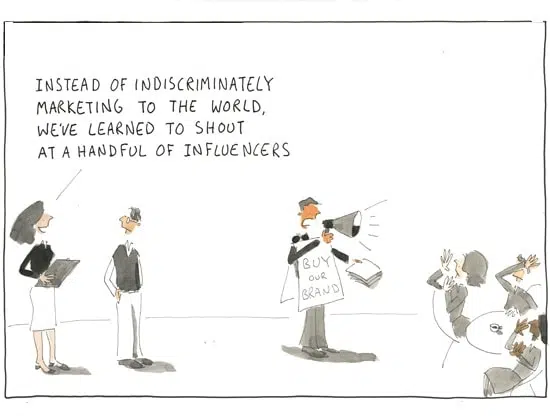
Identify the influencers in the organisation at the various management levels (it will be around 5% of the staff) position them as role models and give them leadership training
In summary, what I took from Des’s talk was that a significant part of the task when starting to adopt a services-led strategy is about the people you engage: be they your customer, who you have to convince to work with you in a different way, or your own staff, who have to embrace a whole new way of working. There are no shortcuts- it took MAN UK 10 years to get this right- but there is a lot that companies making this change today can learn from eachother and from those that have succeeded.
This is one of the motivating factors for us behind providing the Advanced Services Partnership, an exclusive network of likeminded executives applying services to their companies. If you’re interested in the partnership, we’re running an induction programme in Birmingham on 7th and 8th June; do contact me if you’re interested.