




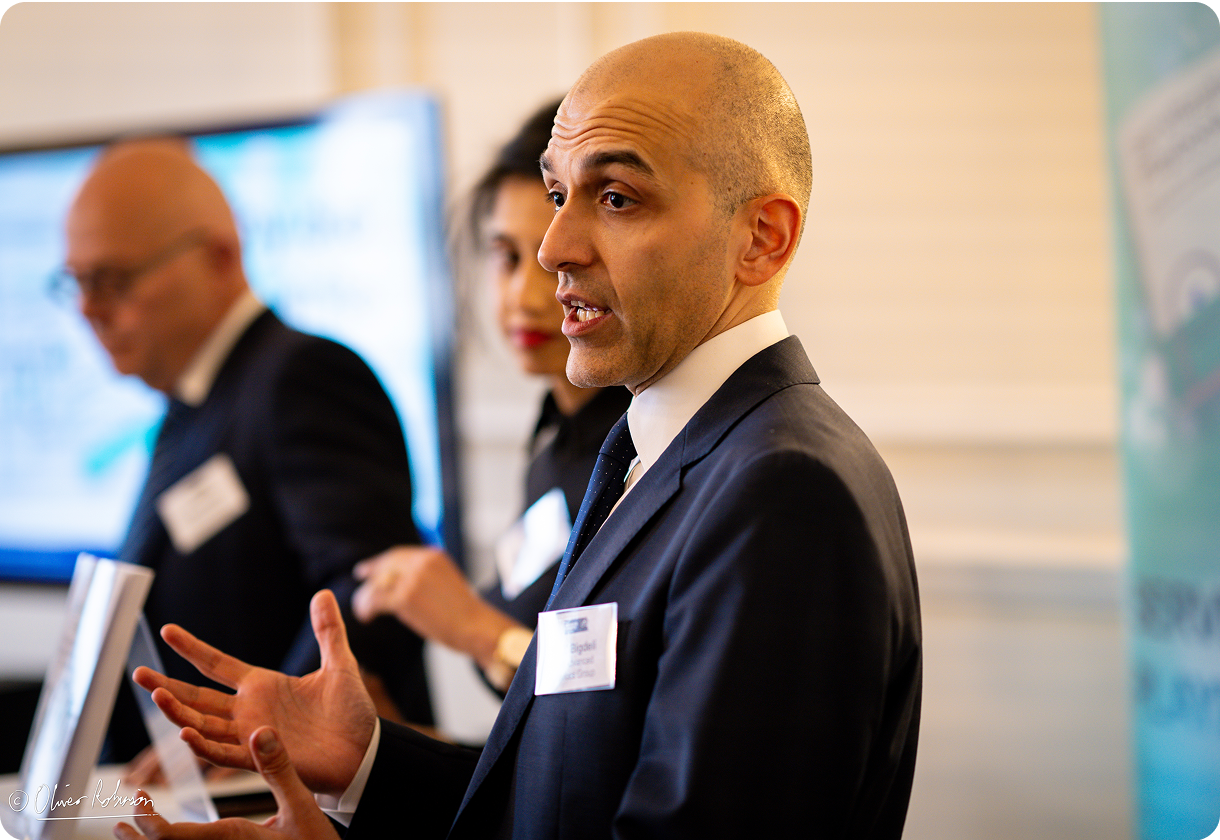




Last week we held our 6th Spring Servitization Conference. It was the first time we’d hosted the conference outside the UK, and we were near the beautiful Swiss Alps in Lucerne, in collaboration with the Lucerne University of Applied Sciences and Arts. The main theme of this year was Internationalisation Through Servitization. I must say it was another well-attended and well-received conference where we accommodated 32 presentations, 28 posters, 6 keynotes and more than 80 delegates.
Monday 15th & Tuesday 16th focused on the full paper presentations. We followed our tried-and-tested structure, one which is innovative for an academic conference, with a single stream where all contributors had an opportunity to present to the whole conference audience, and engage in both structured and semi-structured panel sessions to discuss their work. The programme was designed to encourage strong participation, extensive debate, and continue to bridge research theory and industrial practice.
There were papers presented by academics from Denmark, Switzerland, Portugal, Belgium, Netherlands, Italy, Japan, Slovenia, Germany, Sweden, Spain, Finland, Sri Lanka, and the UK. Their presentations covered a wide range of topics related to servitization, including: the role of business model innovation in servitization, impacts of technological innovation in the pace of the transformation process, servitization in SME manufacturers, business ecosystems and value networks and their positive and negative effects in service transformation, and paradoxes in servitization research and practice.
There was also an interesting presentation by a law scholar who presented a paper on the legal aspects of servitization. This was particularly interesting because it directly resonated with one of our European funded projects (TRAN-SIP) that focuses on servitization in SME manufacturing, in which legal aspects of servitization (e.g. contracts) have been identified as one of the key challenges these firms are facing.
As part of the first two days, we also had 6 keynotes from leading industrialists, including:
-
Felix Keiderling (General Manager, ABB Turbo Systems) who discussed how ABB provides solution-based offerings and how different types of services are developed and delivered in the company;
-
Dr Sherif El-Hanoui (CEO, Consulting4Growth) who shared his experience as a former Service Director of a large global manufacturer, and discussed whether servitization is the right strategy for every manufacturing firm;
-
Lothar Heinrich (Former CIO, SKAN) who discussed how advanced service offerings are developed in the pharmaceutical industry and how regulations impact the delivery of such services;
-
Hansjürg Inniger (Director, Solution Centre Internet of Things & Partner, Zühlke Engineering AG) who explained the role of new technological innovation in driving manufacturers in their journey towards servitization;
-
Matteo Zironi (Group Aftersales Director, ALI Group), who explained how Ali Group has been geared towards the development and delivery of advanced services across its 50 companies; and,
-
Peter Alexander (Sulzer Rotating Equipment Services Division) who talked about how Sulzer transformed towards providing advanced services and the organisational, operational and technological challenges the company faced in the journey.
On Wednesday 17th we gathered at Lucerne University campus. The day was mainly dedicated to early stage researchers and consisted of interactive debates and discussions. We also had two presentations by leading scholars in the filed: Heiko Gebauer and Tim Baines. Heiko reflected on the current state-of-the-art by explaining where we are as a research community, key relevant theories and methods that could be applied while studying servitization, and what the future landscape looks like. Tim focused more on the practice side of servitization, and talked specifically different pathways that manufacturers could follow as they move towards advanced services.
For me, the three key highlights of this year can be summarised as:
-
The maturity of the topic & community. It was interesting to see that the talks and discussions are getting more focused on different aspects of the transformation journey towards servitization. The principles, arguments and evidence underpinning the benefits servitization are becoming more established, and the grand challenge has started to shape around the transformation. Hence, many of the presentations focused on the orgnisational and operational change, as well as the business model innovation required for such transformation.
-
The maturity of theory & research methods. This year I saw a more diverse range of theories and research methods employed to study servitization. More scholars talked about relevant theories that could be applied in this context. They argued that we may not need to come up with a new theory for studying servitization but rather borrow and advance established management theories such as the resource-based view, dynamic capabilities, knowledge-based theory, network theory, practice theory, etc.
-
The maturity of the interdisciplinary aspects. Both during the paper and poster presentations, I came across more interdisciplinary research on the topic of servitizaiton. For instance, in one of the presentations the concept of “ecosystem” (not from the business sense, but more from natural ecosystem) was applied to study the impacts of product-service systems and servitization. Moreover, more papers were using methods such as those that are usually applied in other disciplines including service design research e.g. customer experience methods etc.
Next year we will take the conference to Copenhagen. Our colleagues at Copenhagen Business School have kindly accepted to help us in running the conference, and the main focus will be on competitiveness and servitization.